
Subaru XV for sale in Nairobi Kenya
These are the available Subaru XV vehicles for sale in Nairobi Kenya. They include locally used cars and fresh imports. We can also import one for you with your preferred specifications.
What would you like to do?
Subaru XV in stock now
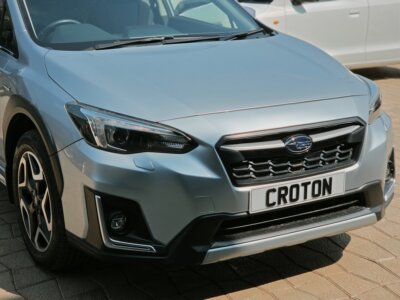
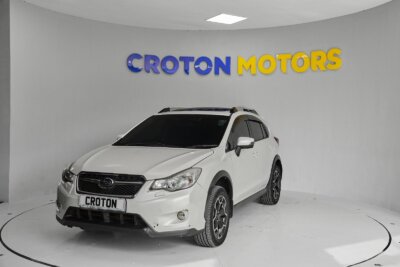
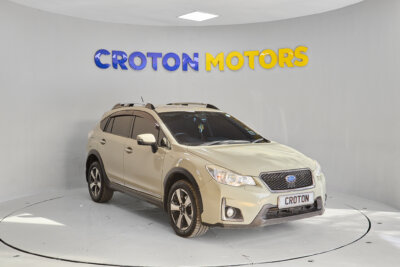


About the Subaru XV
If you’ve spent any time researching crossovers for sale in Kenya, you’ve probably noticed the Subaru XV shows up in a slightly different conversation than the Toyota RAV4, Honda Vezel, or Mazda CX-5. It’s not the default choice — but it’s the one that owners who do choose it tend to defend fiercely.
The Subaru XV is a compact crossover SUV, essentially a jacked-up, more rugged version of the Subaru Impreza hatchback, built around Subaru’s signature Boxer engine and Symmetrical All-Wheel Drive system. It first arrived globally in 2012 and has gone through two full generations (plus a hybrid e-Boxer variant) before being renamed “Crosstrek” in most markets from 2023 onward — though in Kenya, most units in circulation and imported units still carry the XV badge.
In the Kenyan second-hand import market — dominated by Toyota, Nissan, and Mazda — the XV is a bit of an outsider. But for buyers who regularly deal with murram access roads, flooded estates during the rainy season, or upcountry trips off the main highway, the XV’s standard AWD and high ground clearance make a genuine, everyday difference that front-wheel-drive crossovers simply can’t match.
This guide covers everything: pricing, specifications, real-world fuel consumption, reliability in Kenyan conditions, common problems, servicing costs, insurance, and how the XV stacks up against its closest rivals — so you can decide with confidence whether it’s the right car for you
2. Quick Facts Table
| Attribute | Details |
|---|---|
| Model | Subaru XV (badged “Crosstrek” in some export markets from 2023) |
| Manufacturer | Subaru Corporation, Japan |
| Vehicle Type | Subcompact/compact crossover SUV |
| Generations sold in Kenya | 1st gen GP (2012–2017), 2nd gen GT (2017–2023) |
| Engine Options | 1.6L FB16 petrol, 2.0L FB20 petrol, 2.0L e-Boxer hybrid |
| Fuel Type | Petrol / Mild-hybrid petrol |
| Transmission | Lineartronic CVT (automatic); manual on some early Japan-market units |
| Drive Type | Symmetrical All-Wheel Drive (AWD) — standard on every trim |
| Seating | 5 seats |
| Ground Clearance | Approx. 220mm (varies slightly by generation/trim) |
| Boot Capacity | Approx. 310–345 litres (seats up); over 1,200L seats folded |
| Fuel Economy (combined, real-world Kenya) | Approx. 7.5–9.0 km/L in mixed driving |
| Price in Kenya (foreign-used estimate) | Roughly KSh 1.8 million – 3.5 million depending on year, engine, and condition |
| Availability | Mainly foreign-used (Japan) imports; occasional locally-used units |
| Best For | Buyers who value AWD capability, higher ground clearance, and long-distance comfort over outright cheap running costs |
3. Trim Levels
Subaru’s trim naming for the XV has varied by export market and model year, but in Kenya, imported units are typically distinguished by engine size, drive-assist package, and interior specification rather than formal trim badges. Broadly, you’ll encounter three practical tiers in the used-import market:
3.1 Base / Standard Grade (1.6i or 2.0i)
- Cloth seats
- Basic touchscreen or standard head unit (often replaced by importers with aftermarket units)
- Manual air conditioning
- Steel or basic alloy wheels
- No advanced driver-assist features
Best for: First-time buyers and those prioritising a lower purchase price while still getting AWD.
3.2 Mid Grade (2.0i-S / “Premium” equivalent)
- Larger alloy wheels
- Automatic climate control
- Upgraded infotainment with reversing camera
- Leather-wrapped steering wheel
- Roof rails as standard
- Some units include EyeSight driver-assist (Japan-market units especially)
Best for: Most Kenyan buyers — this tier offers the best balance of features, price, and long-term usability.
3.3 Top Grade / e-Boxer Hybrid
- Subaru EyeSight driver-assist suite standard (adaptive cruise control, pre-collision braking, lane departure warning)
- Mild-hybrid e-Boxer powertrain with regenerative braking
- LED headlights with steering-responsive function
- Leather or leather-trimmed seats on select units
- Keyless entry and push-button start
- Premium sound system on higher trims
Best for: Buyers who want the newest technology, the best fuel economy in the range, and the highest resale value.
Trim Recommendation
For most Kenyan buyers, a 2.0i mid-grade petrol unit from 2018 onward offers the sweet spot: enough features to feel modern, simpler mechanicals than the hybrid (which needs specialist attention for the hybrid battery and control module), and strong parts availability.
4. Model History & Generations
First Generation — GP/GH Series (2012–2017)
- Launched in 2012, based on the second-generation Impreza platform.
- Positioned as a rugged alternative to the standard Impreza, with raised suspension and cladding.
- Engines: 1.6L FB16 and 2.0L FB20 naturally aspirated Boxer petrol units.
- Available with a 6-speed manual or Lineartronic CVT depending on market.
- A mid-cycle update around 2015–2016 brought minor styling tweaks, updated infotainment, and suspension refinements.
Second Generation — GT/GK Series (2017–2023)
- All-new platform (Subaru Global Platform), a significant improvement in body rigidity, ride quality, and cabin refinement.
- Launched with the 2.0L FB20 petrol engine and Lineartronic CVT.
- 2018: e-Boxer mild-hybrid variant introduced, adding a small electric motor and battery to improve fuel economy and low-speed responsiveness (not a plug-in hybrid — it cannot be charged externally).
- 2021 facelift: Updated front and rear styling, revised infotainment screen, minor suspension and NVH (noise, vibration, harshness) improvements.
- Subaru’s EyeSight driver-assist system became increasingly standard across trims during this generation.
Rebranding to “Crosstrek” (2023 onward)
- From the third generation (2023+), Subaru renamed the XV to Crosstrek globally, aligning it with the name already used in North America.
- Units sold as “Crosstrek” from Japan/other markets are mechanically the same vehicle family; Kenyan importers may still list these informally as “XV” due to buyer familiarity, so always check the actual model year and badge when buying.
What This Means for Kenyan Buyers
Almost all Subaru XVs currently for sale in Kenya are foreign-used imports from Japan, spanning both generations above. The 2017+ second generation is generally the better buy for reliability, ride comfort, and technology — but well-maintained first-generation units remain a genuinely capable and more affordable entry point into AWD ownership.
5. Exterior Design
The XV’s design has always leaned into a slightly “outdoorsy” identity rather than the sleek, road-focused look of something like a Mazda CX-3.
- Lighting: Halogen projector headlights on earlier/base units, LED headlights (some with steering-responsive cornering function) on higher second-generation trims.
- Grille: Subaru’s signature hexagonal grille, more prominent and chrome-accented after the 2021 facelift.
- Cladding: Black plastic wheel-arch and lower-body cladding is a signature XV styling cue — functional as much as aesthetic, protecting body panels from stone chips on rough roads.
- Wheels: 17-inch and 18-inch alloy wheel options depending on trim and generation; base grades may run smaller wheels with taller sidewall tyres, which slightly improves ride comfort and pothole absorption — a genuine bonus on Kenyan roads.
- Colours: Common Japan-import colours include Crystal White Pearl, Ice Silver Metallic, Crystal Black Silica, Dark Grey Metallic, and Subaru’s distinctive Sunshine Orange/Tangerine Orange on select trims.
- Aerodynamics and stance: The raised ride height and cladding give the XV a more purposeful, ready-for-anything stance than most crossovers in its size class, without the bulk (or fuel consumption) of a mid-size SUV.
6. Interior
Cabin Quality and Comfort
Interior quality is a genuine strength of the second-generation XV in particular. Subaru improved soft-touch materials on the dashboard and doors significantly over the first generation, and the driving position feels more car-like and confident than in taller, boxier rivals.
Space and Practicality
- Front seats: Supportive, with good under-thigh support — comfortable on long highway stretches like Nairobi–Nakuru or Nairobi–Mombasa.
- Rear seats: Adequate legroom for average-height adults; taller passengers will find rear headroom acceptable but not class-leading.
- Storage: Reasonably sized door pockets, a usable centre console box, and a glovebox sized for documents and small items.
- Boot space: At roughly 310–345 litres, the boot comfortably swallows a weekly grocery run, several soft bags, or golf clubs, though it’s smaller than rivals like the RAV4 or CX-5 — families planning frequent long road trips with lots of luggage should test-fit their usual load before buying.
Noise Insulation
Second-generation XVs (2017+) are noticeably quieter at highway speed than the first generation, thanks to improved sealing and the stiffer Subaru Global Platform. Wind and road noise are well controlled up to typical Kenyan highway speeds; coarse murram sections do introduce more tyre roar, as expected of any crossover.
Driver Ergonomics
Controls are logically laid out, visibility out of the windscreen and front quarter windows is good thanks to slim A-pillars, and the raised seating position gives a confident view of the road — useful in Nairobi’s unpredictable traffic and at busy roundabouts.
7. Technology & Infotainment
| Feature | Availability |
|---|---|
| Touchscreen infotainment | Standard from mid-grade up (6.5″–8″ depending on year) |
| Apple CarPlay / Android Auto | Standard on most 2018+ units; earlier/base units may lack it (retrofit possible) |
| Navigation | Built-in on some Japan-spec units; many rely on smartphone navigation via CarPlay/Android Auto |
| Reversing camera | Standard from mid-grade up |
| Digital driver display | Multi-information display standard; full digital cluster on select later trims |
| Climate control | Manual on base grades; automatic dual-zone on higher grades |
| USB ports | Typically 1–2, depending on year and trim |
| Wireless charging | Rare on XV; more common on the later “Crosstrek”-badged facelift |
| EyeSight driver-assist camera system | Standard on higher trims from 2017 generation onward |
Practical note: Many Japan-import units come with a factory infotainment system that displays in Japanese and lacks CarPlay/Android Auto out of the box. Reputable Kenyan importers, including Croton Motors, commonly fit an aftermarket touchscreen head unit with CarPlay and Android Auto during pre-sale preparation — always confirm this has been done and test it yourself before purchase.
8. Engine Options
| Engine | Displacement | Power (approx.) | Torque (approx.) | Notes |
|---|---|---|---|---|
| FB16 Boxer petrol | 1.6L | ~114–115 PS | ~150 Nm | Lighter, more affordable to maintain; adequate but not brisk, especially with AC and passengers loaded |
| FB20 Boxer petrol | 2.0L | ~145–156 PS (market dependent) | ~192–196 Nm | The most common and best all-round choice; noticeably stronger for overtaking and highway merging |
| e-Boxer 2.0L Hybrid | 2.0L + electric motor | ~145–150 PS combined | Improved low-speed torque via electric assist | Mild hybrid only — cannot be plugged in; improves fuel economy and refinement in stop-start traffic |
Which Engine Suits Which Buyer?
- 1.6L FB16: Best for buyers prioritising lower purchase price and simpler running costs, mainly doing city/suburban driving with light loads.
- 2.0L FB20: The recommended default for most Kenyan buyers — enough power for confident highway overtaking on routes like Nairobi–Nakuru, still reasonably efficient.
- e-Boxer Hybrid: Best for buyers who spend a lot of time in stop-start Nairobi traffic and want the best fuel economy in the range, and who are comfortable using a specialist for any future hybrid-system servicing.
Subaru’s Boxer engine layout — flat, horizontally-opposed cylinders — sits lower in the engine bay than a conventional inline engine. This lowers the car’s centre of gravity, which is part of why the XV feels more stable through corners and less top-heavy than its ride height might suggest.
9. Transmission
| Transmission | Availability | Reliability Notes | Driving Feel |
|---|---|---|---|
| Lineartronic CVT | Standard on almost all Kenya-import units | Generally reliable if serviced on schedule with correct CVT fluid; avoid units with a history of overheating or neglected fluid changes | Smooth, linear power delivery; no traditional gear “shifts,” which some drivers need time to adjust to |
| 6-speed manual | Rare; mainly early Japan-domestic-market units | Mechanically simple and durable | More engaging but harder to find in Kenya’s used market |
Maintenance tip specific to CVT: Subaru’s Lineartronic CVT is generally considered more robust than some rival CVTs, but it still depends heavily on using the correct Subaru CVT fluid (not a generic substitute) and changing it at recommended intervals. Ask any seller for CVT fluid service history — this is one of the single most important checks when buying a used XV.
10. Driving Experience in Kenya
City Driving (Nairobi Traffic)
The XV’s light steering, good visibility, and manageable footprint make it easy to thread through Nairobi traffic, and the CVT’s smooth, jerk-free power delivery is genuinely pleasant in stop-start conditions along routes like Waiyaki Way or Thika Road during peak hours.
Highway Driving (Nairobi–Nakuru, Nairobi–Mombasa)
On the open highway, the 2.0L engine has enough reserve power for confident overtaking, and the car tracks straight and stable at speed thanks to its AWD system and low centre of gravity. Long-distance comfort is a genuine strength — seats remain supportive over multi-hour drives, and cabin noise stays well controlled on tarmac.
Gravel, Murram, and Rural Roads
This is where the XV separates itself from most crossovers in its price bracket. With AWD as standard and roughly 220mm of ground clearance, it comfortably handles rutted murram roads, moderate flooding on access roads during the rains, and the kind of rough patches you’ll find heading into many upcountry towns — without the constant fear of grounding out that owners of lower, front-wheel-drive crossovers often describe.
Light Off-Road Use
The XV isn’t a dedicated off-roader like a Land Cruiser or Prado — it lacks low-range gearing and heavy-duty underbody protection — but for light trail use, farm access roads, or safari-lodge driveways, its AWD traction and ground clearance handle far more than a typical urban crossover.
Ride Quality and Handling
The suspension is tuned more for comfort and stability than sporty handling, soaking up speed bumps and potholes well while still feeling composed through corners. It’s not a car built to be thrown around aggressively, but it inspires genuine confidence on imperfect surfaces.
Parking and Manoeuvring
Compact dimensions and a reasonable turning radius make the XV easy to park in tight Nairobi shopping-mall parking or narrow estate roads — helped further on units fitted with a reversing camera.
11. Fuel Economy
| Driving Condition | Approximate Consumption (2.0L petrol) | Approximate Consumption (e-Boxer Hybrid) |
|---|---|---|
| City / stop-start traffic | ~8–10 L/100km (≈10–12.5 km/L) | ~7–8.5 L/100km (≈11.7–14.3 km/L) |
| Highway cruising | ~6.5–7.5 L/100km (≈13.3–15.4 km/L) | ~6.3–7 L/100km (≈14.3–15.9 km/L) |
| Combined real-world Kenya | ~7.5–9 L/100km (≈11–13 km/L) | ~7–8 L/100km (≈12.5–14.3 km/L) |
Kenyan ownership context: These figures are realistic estimates for typical mixed Nairobi and highway driving; actual consumption depends heavily on traffic conditions, AC use, driving style, tyre condition, and load. The XV isn’t the most fuel-efficient crossover on the market — that title generally goes to smaller, lighter, front-wheel-drive rivals — but it’s a reasonable trade-off for the AWD traction and ground clearance you gain.
Fuel-saving tips for XV owners in Kenya:
- Keep tyres correctly inflated — under-inflation on AWD vehicles increases fuel consumption more noticeably than on FWD cars.
- Avoid unnecessary idling in traffic where possible; the e-Boxer hybrid mitigates this better than the standard petrol.
- Service the CVT and engine on schedule — a poorly maintained CVT can quietly hurt fuel economy over time.
- Remove roof-rack accessories when not in use to reduce drag on highway trips.
12. Safety
| Safety Feature | Availability |
|---|---|
| Airbags | Typically 6–7 (front, side, curtain, driver knee on later models) |
| ABS + EBD | Standard |
| Vehicle Stability Control | Standard |
| Subaru EyeSight (adaptive cruise, pre-collision braking, lane departure warning) | Standard on higher trims from 2017-generation onward |
| Blind Spot Monitoring | Available on select higher trims |
| Reversing camera | Standard on mid/higher trims |
| ANCAP / Euro NCAP rating | The Subaru XV has generally scored well in independent crash testing internationally (5-star ratings recorded in several test regimes for relevant model years) |
Important note on ratings: Crash-test ratings vary by exact model year, market specification, and testing body. Always verify the specific rating that applies to the exact model year and market-spec unit you’re buying, since a Japan-domestic-market unit may differ slightly from a Euro-spec or Australian-spec vehicle tested by ANCAP or Euro NCAP.
13. Reliability
Known Strengths
- The FB-series Boxer engines (used from 2012 onward) use a timing chain, not a belt — removing one of the more expensive scheduled maintenance items associated with older Subaru engines.
- Symmetrical AWD systems are mechanically well-proven and known for durability when maintained on schedule.
- Body rigidity and rust resistance are generally solid, aided by good factory corrosion protection.
Known Weaknesses
- Lineartronic CVT reliability depends heavily on consistent fluid changes; neglected units can develop shuddering, hesitation, or premature wear.
- Older EJ-series Subaru engines (used in other Subaru models, not the XV’s FB engines) had a well-documented head-gasket weakness — this is not the same engine family as the XV, but the reputation sometimes unfairly follows the brand in secondhand-market conversations, so it’s worth clarifying when researching.
- Some electronic accessories (infotainment units, sensors) on Japan-import units can be finicky if the vehicle sat unused for extended periods before import.
Long-Term Ownership and Mileage Expectations
With consistent servicing, XV engines and AWD drivetrains are capable of comfortably exceeding 200,000km. As with any import, the biggest single predictor of long-term reliability isn’t the model itself but how well the specific unit was maintained before it arrived in Kenya — a full Japan export inspection report and service history are worth requesting from your dealer.
14. Common Problems
| Issue | Symptoms | Likely Cause | Approx. Repair Cost Range (KES) | Prevention |
|---|---|---|---|---|
| CVT shuddering/hesitation | Jerky acceleration, delayed response | Old/contaminated CVT fluid, worn chain | 15,000–80,000+ depending on severity (fluid flush vs. major repair) | Change CVT fluid at recommended intervals with genuine Subaru fluid |
| Oil consumption on higher-mileage units | Need to top up oil between services | Piston ring wear on older/high-mileage engines | Varies; monitor and address early | Regular oil changes with correct grade; avoid extended service intervals |
| AWD/differential noise | Whining or clunking, especially on tight turns | Low or degraded differential fluid | 5,000–25,000 for fluid service; higher if components are worn | Service front/rear differential fluid on schedule |
| Infotainment/electronics glitches | Freezing screen, non-functional CarPlay | Aftermarket unit faults or wiring issues on retrofitted systems | 5,000–30,000 | Buy from a dealer that properly tests retrofitted infotainment before sale |
| Suspension bushing wear | Clunks over bumps, vague steering feel | Normal wear, accelerated by rough roads | 10,000–40,000 | Have suspension inspected at each major service, especially on murram-heavy routes |
How serious are these issues? None of the above are considered severe or safety-critical if caught early — they’re broadly consistent with normal wear-and-tear patterns seen across the crossover segment. The key risk with any import is buying a unit where these items were neglected rather than the model being inherently problematic.
15. Maintenance Costs in Kenya
| Service Item | Typical Interval | Approx. Cost in Kenya (KES) |
|---|---|---|
| Engine oil and filter change | Every 5,000–10,000km | 6,000–12,000 |
| CVT fluid change | Every 40,000–60,000km | 15,000–30,000 |
| Air filter | Every 20,000–30,000km | 2,000–4,000 |
| Brake pads (per axle) | Every 30,000–50,000km, driving dependent | 8,000–18,000 |
| Tyres (set of 4) | Every 40,000–60,000km | 40,000–90,000 depending on brand/size |
| Battery replacement | Every 3–4 years | 12,000–20,000 |
| Front/rear differential fluid | Every 40,000–60,000km | 6,000–15,000 |
| Full major service | Annually or every 20,000km | 15,000–35,000 |
Kenyan context: Servicing an XV costs somewhat more than a comparable Toyota RAV4 or Nissan X-Trail, mainly because Subaru-specific fluids (CVT fluid, differential fluid) and some parts are less commonly stocked than mainstream Toyota/Nissan equivalents. Budgeting slightly above what you would for a mainstream Japanese crossover is realistic.
16. Spare Parts Availability in Kenya
- Genuine/OEM parts: Available through Subaru’s authorised parts channels in Kenya, though typically with longer lead times and higher prices than Toyota or Nissan equivalents, especially for less commonly replaced components.
- Used/”jua kali” imported parts: Widely available for common wear items (suspension components, body panels, lights, mirrors) through Nairobi’s used-parts dealers, particularly around Kirinyaga Road and the wider Industrial Area parts market — often at significantly lower cost than genuine parts.
- Consumables: Oil filters, air filters, brake pads, and batteries are easy to source, including reputable aftermarket brands.
- Specialist components: CVT internals, e-Boxer hybrid battery/control modules, and EyeSight camera assemblies are more specialised and best handled by a workshop experienced specifically with Subaru vehicles rather than a general mechanic.
Practical takeaway: Day-to-day servicing parts are not a problem in Kenya. It’s the less common, more specialised components — particularly anything related to the CVT or hybrid system — where you should plan for a bit more searching, cost, and lead time compared with mainstream Toyota or Nissan models.
17. Insurance Costs in Kenya
Comprehensive insurance premiums for a Subaru XV in Kenya generally fall within the same broad range as other Japanese-import crossovers of similar value, typically calculated as a percentage of the vehicle’s insured value (commonly in the region of 4–7% annually for comprehensive cover, varying by insurer, driver profile, and vehicle year).
Factors that affect your premium:
- Vehicle value/insured amount (newer, higher-value units cost more to insure)
- Driver’s age, driving history, and claims record
- Whether the vehicle is used for private or commercial purposes (e.g., ride-hailing)
- Security features fitted (tracking device, alarm)
- Chosen insurer and excess/deductible level
As with all imports, it’s worth comparing quotes from 2–3 insurers, since Subaru-specific parts costs (relevant to accident repair claims) can sometimes push premiums slightly higher than an equivalent-value mainstream Toyota model — always ask your insurer directly for an accurate quote based on the specific unit and your profile.
18. Why Buy a Subaru XV?
- Genuine AWD traction as standard — not an optional extra, unlike most competitors where AWD/4WD is reserved for higher trims.
- Real ground clearance — around 220mm comfortably clears speed bumps, uneven estate roads, and rough rural access roads without scraping.
- Confidence-inspiring highway stability — the low centre of gravity from the Boxer engine layout makes overtaking and high-speed cornering feel more secure than the car’s crossover styling might suggest.
- Comfortable long-distance cruiser — supportive seats and good NVH control (especially on second-generation models) suit Kenya’s long-distance routes well.
- Distinct from the crowd — if you want something other than the ubiquitous RAV4 or X-Trail while still getting genuine capability, the XV stands out without being impractical.
- Solid resale demand within its niche — Subaru buyers in Kenya tend to be loyal repeat owners, supporting steady demand for well-maintained used units.
19. Competitors & Comparisons
Subaru XV vs. Key Rivals in Kenya
| Model | Drive Type | Approx. Ground Clearance | Approx. Fuel Economy (combined) | Approx. Price Range (KES) | Key Strength |
|---|---|---|---|---|---|
| Subaru XV | AWD (standard) | ~220mm | ~7.5–9 L/100km | 1.8M–3.5M | Standard AWD + high ground clearance |
| Toyota RAV4 | FWD/AWD (AWD often optional/higher trim) | ~195–200mm | ~7–9 L/100km | 2.0M–4.5M | Widest parts availability, strong resale |
| Honda Vezel/HR-V | Mostly FWD, some AWD/hybrid | ~185–195mm | ~6–7.5 L/100km (hybrid) | 1.6M–3.2M | Excellent fuel economy, especially hybrid |
| Mazda CX-5 | FWD/AWD | ~195–210mm | ~7.5–9.5 L/100km | 2.2M–4.8M | Premium interior feel, sharp handling |
| Nissan X-Trail | FWD/4WD (4WD on select trims) | ~200–210mm | ~8–10 L/100km | 1.9M–4.0M | Spacious interior, family practicality |
| Toyota C-HR | FWD mostly | ~150–155mm | ~6.5–8 L/100km | 1.7M–3.0M | Bold styling, efficient hybrid option |
How the XV Compares in Practice
- Subaru XV vs. Toyota RAV4: The RAV4 wins on interior space, parts network size, and resale liquidity. The XV wins on standard AWD (RAV4’s AWD is often trim-dependent) and a lower purchase price for comparable capability.
- Subaru XV vs. Honda Vezel/HR-V: The Vezel/HR-V is more fuel-efficient and cheaper to maintain for buyers who mainly drive on tarmac, but the XV is the clearly more capable choice for rough or rural roads.
- Subaru XV vs. Mazda CX-5: The CX-5 feels more upmarket inside and drives with a sportier edge, but typically costs more to buy and maintain; the XV is the more budget-conscious way to get genuine AWD capability.
- Subaru XV vs. Nissan X-Trail: The X-Trail offers more interior and boot space for larger families, while the XV is the more agile, car-like drive with standard (not optional) AWD.
20. Pros and Cons
| Pros | Cons |
|---|---|
| Standard AWD on every trim — not an optional extra | Higher servicing and parts costs than mainstream Toyota/Nissan rivals |
| Generous ~220mm ground clearance for a crossover this size | Smaller boot capacity than several key rivals |
| Stable, confidence-inspiring highway and cornering feel | Fuel economy trails smaller FWD-only competitors |
| Comfortable, well-controlled ride on rough roads | Rear seat space adequate but not class-leading |
| Genuinely useful for murram/rural roads without needing a full SUV | CVT requires disciplined maintenance to stay reliable |
| Distinctive alternative to the common RAV4/X-Trail crowd | Fewer specialist workshops than for mainstream Japanese brands |
| Strong long-term durability with consistent servicing | Hybrid e-Boxer variant needs specialist attention for hybrid components |
21. Frequently Asked Questions
Is the Subaru XV reliable in Kenya?
Yes, generally — the FB-series engines and Symmetrical AWD system are mechanically sound and well-proven, provided the specific unit has a consistent service history, particularly regarding CVT fluid changes. Reliability depends more on how well an individual imported unit was maintained than on any inherent design flaw.
What is the fuel consumption of the Subaru XV?
Expect roughly 7.5–9 L/100km (about 11–13 km/L) in mixed Kenyan driving for the standard 2.0L petrol, and slightly better — around 7–8 L/100km — for the e-Boxer hybrid variant. Highway-only driving improves these figures noticeably.
Is the Subaru XV expensive to maintain in Kenya?
It costs somewhat more than a comparable Toyota RAV4 or Nissan X-Trail, mainly due to Subaru-specific fluids and less widespread parts stocking, but routine servicing (oil, filters, brakes, tyres) remains affordable and well within reach for typical crossover ownership budgets.
Can the Subaru XV handle Kenyan roads, including murram and rural roads?
Yes — this is one of its strongest selling points. Standard AWD combined with around 220mm of ground clearance makes it noticeably more capable than most front-wheel-drive crossovers on murram, rutted access roads, and moderate rainy-season flooding.
How much is insurance for a Subaru XV in Kenya?
Comprehensive cover typically runs in the region of 4–7% of the vehicle’s insured value annually, varying by insurer, driver profile, and vehicle year — get a direct quote for your specific unit for accuracy.
Can the Subaru XV tow anything?
The XV isn’t designed as a dedicated tow vehicle and has a modest towing capacity compared with body-on-frame SUVs. It can handle light trailers within manufacturer-specified limits, but it’s not the right choice if regular, heavy towing is a priority — a Prado or Fortuner would suit that need better.
Does the Subaru XV have Apple CarPlay and Android Auto?
Most 2018-onward units support it as standard, or have it fitted via a reputable dealer’s aftermarket infotainment upgrade. Earlier or base-grade units may need a retrofit — always test connectivity yourself before purchasing.
How many airbags does the Subaru XV have?
Typically 6–7, including front, side, and curtain airbags, with a driver’s knee airbag added on several later model years — always confirm the exact count for your specific model year and market spec.
Which Subaru XV engine is best for Kenya?
The 2.0L FB20 petrol is the recommended default for most buyers, offering a good balance of highway performance and manageable running costs. The e-Boxer hybrid suits buyers who spend significant time in Nairobi traffic and want the best fuel economy; the 1.6L suits buyers prioritising a lower purchase price.
Which year of Subaru XV should I buy?
Generally, aim for a 2017 or newer second-generation unit — it offers a meaningfully quieter cabin, better build quality, and more available safety technology than the first generation, while remaining reasonably priced in the used-import market.
22. Should You Buy It? Final Verdict
If you’re searching for a Subaru XV for sale in Kenya, comparing the Subaru XV price in Kenya against rivals, or trying to weigh up Subaru XV fuel consumption and Subaru XV maintenance cost against the practical benefits of standard all-wheel drive — here’s the honest summary.
The Subaru XV is not the cheapest crossover to run, and it won’t win on boot space or outright fuel economy against some rivals. What it offers instead is something harder to quantify but easy to feel once you’ve driven it on a rough road: genuine, standard-fit AWD traction and real ground clearance, wrapped in a comfortable, car-like package that never feels like it’s compromising on daily drivability to get there.
Best suited to:
- Buyers who regularly travel on murram, rural, or poorly maintained roads
- Long-distance commuters who value highway stability and ride comfort
- Buyers wanting a distinctive alternative to the RAV4/X-Trail default
- Owners willing to budget slightly more for servicing in exchange for capability
Perhaps better suited elsewhere if:
- Your driving is almost entirely smooth urban tarmac and fuel economy is the top priority (consider a Vezel/HR-V hybrid)
- You need maximum boot and rear passenger space for a larger family (consider an X-Trail or RAV4)
- You need serious towing or heavy off-road capability (consider a Prado or Fortoner-class SUV)
For the right buyer — someone who wants dependable, everyday AWD capability without stepping up to a full-size SUV’s price or fuel bill — the Subaru XV remains a genuinely compelling, slightly under-the-radar choice in the Kenyan market. Explore current Subaru XV stock and get an accurate, up-to-date price quote by speaking directly with the Croton Motors team.
What is the price of Subaru XV in Kenya?
Prices of locally used Subaru XV in Kenya will range from as low as KES 1,800,000 to around KES 3,789,000 for new models. Below is a price guide of newly imported Subaru XV in Nairobi and Mombasa.
| Model Year | Price |
|---|---|
| 2014 | KES 1,800,000 ~ 2,000,000 |
| 2015 | KES 2,100,000 ~ 2,200,000 |
| 2016 | KES 2,250,000 ~ 2,400,000 |
| 2017 | KES 2,850,000 ~ 3,050,000 |
| 2018 | KES 3,000,000 ~ 3,300,000 |
| 2019 | KES 3,250,000 ~ 3,550,000 |
| 2020 | KES 3,500,000 ~ 3,789,000 |
Are you looking at buying new or used Subaru XV in Kenya? Are you looking at selling your used Subaru XV in Kenya? Do you want to know the prices of new or used Subaru XV in Kenya? Do you want to know how to import Subaru XV from Japan? Please visit our show room in Karen, Nairobi and our sales agents will guide you.
Below is a list of Subaru XV for sale in Nairobi, Kenya and also others available in Japan. You can now buy and import year 2026, 2025, 2024, 2023, 2022, 2021, 2020, and 2019 Subaru XV from Japan to Kenya.
Subaru XV Videos
- Subaru XV SUV review Loading Video
- 2019 Subaru XV Review - New MotoringLoading Video
- 2016 Subaru XV 2.0i-S review | Top 5 reasons to buyLoading Video
- SUBARU XV CROSSTREK & FORESTER XTLoading Video
- Subaru XV 2017 reviewLoading Video
- 2014 Subaru XV ReviewLoading Video