
Ford Everest for sale in Nairobi Kenya
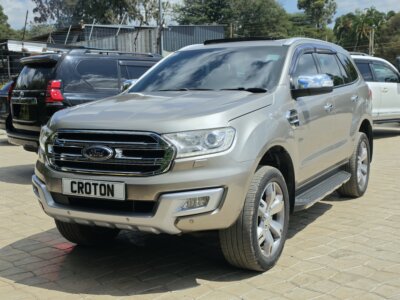
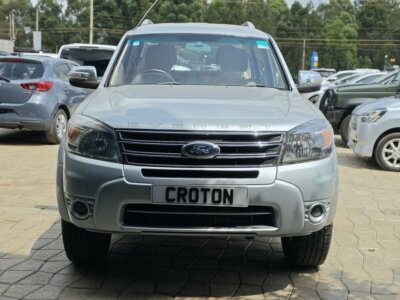
These are the available Ford Everest vehicles for sale in Nairobi Kenya. They include locally used cars and fresh imports. We can also import one for you with your preferred specifications.
What would you like to do?
Ford Everest in stock now
About the Ford Everest
If you’ve been shopping for a rugged, family-friendly SUV that can handle a school run in Nairobi on Monday and a trip to the Maasai Mara on Friday, chances are the Ford Everest has already crossed your radar. It’s one of the more interesting vehicles in the Kenyan market right now — not as common as a Toyota Prado or a Land Cruiser, but increasingly popular with buyers who want something different without giving up 4×4 capability, seven-seat practicality, or genuine towing muscle.
The Everest is essentially a Ford Ranger wearing an SUV body — and that’s exactly why it appeals to so many Kenyan buyers. It borrows the pickup’s tough body-on-frame chassis and diesel engines, then wraps them in a proper family wagon with three rows of seats, a plush cabin, and modern safety tech.
This guide brings together everything a genuine buyer, researcher, or fleet manager needs to know before purchasing a Ford Everest in Kenya — real-world driving impressions, honest reliability information, maintenance costs, spare parts availability, insurance considerations, and how it stacks up against its closest rivals. Nothing here is filler. If you’re the kind of buyer who wants to actually understand a car before signing anything, this is written for you.
Quick Facts Table
| Attribute | Details |
|---|---|
| Model | Ford Everest |
| Manufacturer | Ford Motor Company |
| Vehicle Type | Mid-size, body-on-frame SUV (7-seater) |
| Current Generation in Kenya | Next-Gen Everest (2022–present, platform code U704) and previous-generation Everest (2015–2022, U375) commonly available used/imported |
| Engine Options | 2.0L Single-Turbo diesel, 2.0L Bi-Turbo diesel, 3.0L V6 Turbo diesel (Platinum) |
| Fuel Type | Diesel |
| Transmission | 6-speed automatic (entry engine) / 10-speed automatic (Bi-Turbo & V6) |
| Drive Type | 4×2 (RWD) or 4×4 with low-range transfer case, depending on trim |
| Seating | 7 seats (5+2, three rows) |
| Ground Clearance | Approx. 225–234 mm depending on trim and suspension setup |
| Boot Capacity | Approx. 259 litres (3rd row up) to over 1,050 litres (3rd row folded) |
| Fuel Economy (combined, manufacturer-claimed) | Roughly 7.5–8.5 L/100km depending on engine and drivetrain |
| Price in Kenya | Used imports from roughly KSh 4.5 million; brand-new Next-Gen units considerably higher — see pricing section below |
| Availability | Available as new arrivals and quality used imports through dealers such as Croton Motors |
1. Introduction: Why the Ford Everest Is Winning Fans in Kenya
The Ford Everest occupies an interesting space in the Kenyan car market. Most family SUV buyers here default to the “usual suspects” — Toyota Prado, Toyota Fortuner, Mitsubishi Pajero, Nissan X-Trail. The Everest is the alternative that rewards buyers who do their homework.
What makes it stand out is simple: it’s a genuine ladder-frame off-roader (not a soft-roader built on a car platform), it shares its underpinnings with the Ford Ranger — a pickup that has built a strong reputation with NGOs, safari operators, and rural professionals across Kenya — and it comes generously equipped with technology that, on some trims, rivals vehicles costing significantly more.
It’s popular with:
- Families who want three rows of usable seating, not a cramped third row that’s only good for children
- Safari and tourism operators who need genuine off-road ability with SUV comfort
- Business owners and executives who want something distinctive without going full luxury-SUV price
- NGOs and diplomatic missions, many of whom already run Ford Rangers and appreciate the parts and mechanical familiarity
- Returning residents and importers bringing in well-specced units from left-hand-drive-to-right-hand-drive markets like Thailand and South Africa
Is the Ford Everest worth buying in Kenya? For the right buyer — yes. It is a highly capable, well-equipped, genuinely comfortable SUV. But it isn’t the default choice for everyone, and this guide will be upfront about where it makes sense and where a Toyota-badged alternative might suit you better, particularly around parts availability and resale value.
2. Trim Levels
Ford sells the Everest in several trims depending on the market of origin, so imported/used units in Kenya can differ. The typical trim ladder (most commonly seen on Thailand- and South Africa-sourced units, which make up the bulk of Kenya’s Everest population) looks like this:
| Trim | Positioning | Typical Engine | Drive | Notable Features |
|---|---|---|---|---|
| Ambiente | Entry-level, often fleet/commercial spec | 2.0L Single-Turbo diesel | 4×2 | Basic infotainment, cloth seats, manual air-con, steel wheels on some units |
| Trend | Mid-range, most common private-buyer spec | 2.0L Single-Turbo or Bi-Turbo diesel | 4×2 or 4×4 | Larger touchscreen, alloy wheels, reverse camera, cruise control |
| Sport | Sportier styling, popular with younger buyers | 2.0L Bi-Turbo diesel | 4×4 | Black exterior accents, larger alloys, upgraded suspension tune |
| Titanium | Premium comfort-focused trim | 2.0L Bi-Turbo diesel | 4×4 | Leather seats, powered tailgate, larger touchscreen, ambient lighting |
| Platinum | Range-topping flagship | 3.0L V6 Turbo diesel | 4×4 | Massage seats (select markets), premium sound system, matrix LED headlights, E-Shifter rotary gear selector |
Which trim should you buy?
- Buying primarily for family duty in the city with occasional upcountry trips: Trend or Sport with the Bi-Turbo engine gives you the best balance of comfort, tech, and value.
- Buying for genuine off-road/safari use: Sport or Titanium in 4×4 configuration, thanks to the additional torque of the Bi-Turbo engine and standard low-range gearing.
- Buying for maximum comfort and status: Platinum, if you can find one and are comfortable with the V6’s higher fuel consumption and — being a rarer specification in Kenya — potentially longer wait times for certain parts.
- Buying on a tighter budget or for basic commercial/fleet use: Ambiente 4×2 is the most affordable entry point, though it misses out on 4×4 capability.
3. Model History
Understanding the Everest’s model history matters in Kenya because both the outgoing and current generations are actively bought and sold here.
| Generation | Years | Key Details |
|---|---|---|
| First Generation | 2003–2015 | Based on the original Ranger, sold mainly in Asia-Pacific markets; rarely seen in Kenya |
| Second Generation (U375) | 2015–2022 | Global model based on the T6 Ranger platform. Launched with 2.2L 4-cylinder and 3.2L 5-cylinder diesel engines. This is the generation most commonly found as a used import in Kenya |
| 2019 Facelift | 2019–2022 | Introduced the 2.0L Bi-Turbo diesel engine paired with a 10-speed automatic gearbox, updated styling, and revised infotainment — considered the sweet spot for used buyers |
| Third Generation / Next-Gen Everest (U704) | 2022–present | All-new model based on the Ranger T6.2 platform. Major redesign of exterior, interior, and technology; introduced the 3.0L V6 diesel Platinum flagship, matrix LED lighting, and a significantly upgraded infotainment system with a portrait touchscreen on higher trims |
What this means for buyers: If you’re shopping used, a facelifted 2019–2022 Everest with the Bi-Turbo engine is widely regarded as offering the best value — modern drivetrain, improved reliability over the earlier 3.2L, and a lower price than the Next-Gen model. If you want the latest technology, comfort, and safety features, the Next-Gen (2022 onward) is the one to look for, generally at a higher price point.
4. Exterior Design
The Everest has always worn its Ranger DNA proudly, and the current Next-Gen model takes that further with a bolder, more upright front end.
- Front fascia: A tall, wide grille (C-clamp style LED headlights on higher trims) gives the Everest strong road presence — buyers frequently comment that it looks more substantial in person than in photos.
- Lighting: Base trims use halogen or standard LED headlights; Platinum trims get Matrix LED headlights that automatically shape the beam to avoid dazzling oncoming traffic — genuinely useful on poorly lit upcountry roads at night.
- Wheel options: Range from 17-inch steel or alloy wheels on Ambiente/Trend to 20-inch alloys on Sport, Titanium, and Platinum. Larger wheels look sharper but come with a firmer ride and pricier tyre replacement — worth weighing if you frequently drive on rough murram roads.
- Colours: Common available colours include Arctic White, Shadow Black, Meteor Grey, Aluminium Silver, Absolute Black, and occasionally a signature blue or orange on Sport trims. White and silver tend to hide dust best — a practical consideration on Kenya’s dustier rural roads.
- Aerodynamics and styling: A raked windscreen, sculpted bonnet, and integrated roof rails give the Everest a more SUV-like profile than its Ranger sibling despite sharing the same cab-forward design up front.
5. Interior
Step inside and the Everest does a good job of disguising its pickup-truck origins.
- Cabin quality: Soft-touch materials on the dashboard and door cards on Trend trim and above, with genuine leather (or convincing leatherette) on Titanium and Platinum. Ambiente and base Trend trims use harder plastics lower down the cabin — functional, but noticeably less plush.
- Comfort: Front seats are supportive on long drives, with power adjustment on Titanium/Platinum. Second-row seats recline and offer good legroom for a mid-size SUV. The third row is genuinely usable by teenagers and adults for shorter trips, though best reserved for children on longer journeys — a fair trade-off for the extra practicality.
- Visibility: The high seating position gives excellent forward visibility, a real advantage in Nairobi traffic where you want to see over smaller cars and boda bodas. Rear visibility is more limited due to thick C-pillars, which is where the standard reversing camera earns its keep.
- Storage and practicality: Generous door pockets, a large centre console, and (on Platinum, thanks to the rotary E-Shifter freeing up console space) a genuinely useful storage bin ahead of the gear selector.
- Noise insulation: Cabin insulation is a genuine strength of the Next-Gen model — Ford invested heavily in reducing diesel clatter and road noise, and it shows. The older 2015–2019 pre-facelift model is noticeably noisier, particularly with the 3.2L five-cylinder engine.
- Driver ergonomics: Controls are logically laid out, with a mix of physical buttons for climate control (a deliberate, sensible choice that many touchscreen-only rivals lack) and a portrait touchscreen for infotainment on higher trims.
6. Technology
| Feature | Availability |
|---|---|
| Touchscreen infotainment | Standard across the range; size increases with trim (up to 12-inch portrait screen on Titanium/Platinum in the Next-Gen model) |
| Apple CarPlay | Standard, wireless on higher Next-Gen trims |
| Android Auto | Standard, wireless on higher Next-Gen trims |
| Built-in navigation | Available on Titanium and Platinum |
| Wireless phone charging | Available on Titanium and Platinum trims |
| Digital instrument cluster | Standard on Next-Gen Sport, Titanium, and Platinum; older/base trims use analogue dials with a small digital display |
| USB ports | Multiple USB-A/USB-C ports across all rows on newer models |
| Climate control | Manual air-con on Ambiente; dual-zone automatic climate control from Trend upward |
| Connectivity | FordPass Connect app support on newer models for remote vehicle status (availability of full app functionality in Kenya should be confirmed, as some connected services are region-locked) |
Practical takeaway: For daily use in Kenya, Apple CarPlay/Android Auto integration means you can rely on Google Maps or Waze for real-time traffic and road condition updates rather than the sometimes outdated built-in navigation — genuinely useful given how often Nairobi’s road layouts change.
7. Engine Options
| Engine | Power | Torque | Best Suited For |
|---|---|---|---|
| 2.0L Single-Turbo Diesel | Approx. 125 kW (168 hp) | Approx. 405 Nm | Buyers prioritising lower purchase price and simpler mechanicals; adequate for city and light highway use, less relaxed when fully loaded or towing |
| 2.0L Bi-Turbo Diesel | Approx. 154 kW (207 hp) | Approx. 500 Nm | The sweet spot for most Kenyan buyers — strong overtaking performance on highways like Nairobi–Nakuru, confident with a full load of passengers and luggage |
| 3.0L V6 Turbo Diesel (Platinum) | Approx. 184 kW (250 hp) | Approx. 600 Nm | Buyers wanting effortless performance and maximum towing capacity; best suited to those less concerned about fuel economy |
Reliability notes: The Bi-Turbo four-cylinder has proven itself globally as a strong, relatively modern unit, though as with any turbo-diesel, it depends heavily on disciplined servicing and correct oil specification. The older 3.2L five-cylinder (pre-2019 models) is a simpler, arguably more mechanically robust unit but is thirstier and noisier. The V6 is the most refined but also the most complex and expensive to service.
8. Transmission
| Transmission | Used With | Notes |
|---|---|---|
| 6-speed automatic | 2.0L Single-Turbo (entry trims) | Smooth and dependable, though occasionally hunts for gears on steep upcountry inclines |
| 10-speed automatic | 2.0L Bi-Turbo & 3.0L V6 | Shared with the Ford Ranger Raptor; shifts quickly and keeps the engine in its power band well, contributing to both performance and fuel efficiency |
There is no manual transmission option on Everest units typically sold new in RHD markets — nearly all Kenyan-market Everests are automatic, which suits the stop-start nature of Nairobi traffic well. The 10-speed unit, while more complex, has generally proven reliable when serviced on schedule with the correct transmission fluid.
9. Driving Experience
In Nairobi traffic: The elevated seating position and light steering (on power-assisted variants) make the Everest surprisingly manageable in daily commuting despite its size. It’s not a small car, but visibility and a tight-ish turning circle for the segment help.
On the highway (Nairobi–Nakuru, Nairobi–Mombasa): This is where the Everest, particularly with the Bi-Turbo engine, feels genuinely at home. Strong mid-range torque makes overtaking trucks on single-lane highways confidence-inspiring rather than nerve-wracking. The cabin stays composed and quiet at 100–120 km/h.
On murram, gravel, and rural roads: With 225 mm-plus of ground clearance, the Everest shrugs off potholes, speed bumps, and rutted access roads that would have a lower crossover scraping its underside. The suspension is tuned firmly enough for load-carrying stability but softly enough to absorb corrugations comfortably.
Off-road: 4×4 variants come with genuine low-range gearing and terrain management modes (Normal, Mud/Ruts, Sand, and on some trims, Rock Crawl). This isn’t a badge-only “4×4” — it’s a real off-roader capable of handling the kind of terrain found en route to conservancies and national parks.
Ride quality and handling: Suspension is tuned more for comfort and load-carrying stability than for sporty handling — appropriate for a family SUV, though body roll through corners is more noticeable than in a car-based crossover.
Braking and parking: Braking performance is confident, aided by a firm pedal feel. Parking in tight Nairobi CBD or mall car parks takes a little more care than in a smaller crossover, but the standard reversing camera (and front/rear parking sensors on higher trims) makes it manageable.
Overall: It’s an enjoyable, relaxed vehicle to drive daily, and genuinely rewarding on longer road trips — arguably where it feels most in its element.
10. Fuel Economy
| Driving Condition | Approximate Real-World Consumption* |
|---|---|
| City driving (Nairobi traffic) | 9.5–11.5 L/100km |
| Highway cruising | 7.5–8.5 L/100km |
| Combined average (mixed use) | 8.5–10 L/100km |
| Off-road / heavily loaded | 11–13+ L/100km |
*These are practical estimates based on typical real-world diesel SUV performance in this class and Kenyan driving conditions (traffic, altitude, fuel quality); actual consumption will vary by engine, trim, driving style, and load. Manufacturer-claimed combined figures are generally lower, as is typical for lab-cycle testing versus real-world use.
Fuel-saving tips for Kenyan owners:
- Use the Eco driving mode where fitted for city commuting
- Keep tyre pressures correct — under-inflated tyres are a common, easily fixed cause of poor fuel economy
- Avoid excessive idling in traffic; the auto engine stop-start feature (where fitted) helps here
- Fill up at reputable stations, as poor fuel quality can affect a modern common-rail diesel injection system’s performance over time
11. Safety
| Feature | Availability |
|---|---|
| Airbags | Up to 7–8 airbags on higher Next-Gen trims (driver, passenger, side, curtain, driver knee); fewer on base trims — confirm the specific unit |
| ABS & EBD | Standard across the range |
| Electronic Stability Control | Standard |
| Lane Keep Assist | Available on Next-Gen Trend and above |
| Blind Spot Monitoring | Available on Next-Gen Titanium and Platinum |
| Adaptive Cruise Control | Available on Next-Gen Titanium and Platinum |
| Automatic Emergency Braking | Available on Next-Gen models |
| ANCAP Rating | The Next-Gen Everest/Ranger platform was awarded a 5-star ANCAP safety rating in 2022 |
Practical note: Safety equipment varies meaningfully between the pre-2022 model and the Next-Gen version, and between trims within each generation. If advanced driver-assist features matter to you, verify exactly what is fitted on the specific unit you’re considering — don’t assume every Everest has the same safety kit.
12. Reliability
Known strengths:
- The Bi-Turbo diesel and 10-speed automatic combination has generally proven dependable when serviced on schedule
- Shared mechanical DNA with the Ford Ranger — one of the more trusted diesel pickups in Kenya’s commercial and NGO fleets — gives some reassurance about long-term durability
- Robust ladder-frame construction handles Kenyan road conditions well over time
Known weaknesses / points to watch:
- Turbo-diesel engines of this type are sensitive to oil quality and servicing discipline — irregular servicing is the single biggest cause of premature issues
- Some earlier Bi-Turbo units (globally) have had reported issues with EGR and DPF (diesel particulate filter) systems, particularly on vehicles used mostly for short city trips without occasional sustained highway running
- As a lower-volume brand in Kenya compared to Toyota or Isuzu, long-term reliability data from local ownership is comparatively limited
Mileage expectations: With disciplined maintenance, the diesel engines are capable of covering well over 250,000–300,000 km before requiring major work — broadly in line with expectations for a modern turbo-diesel in this class, though this is a general expectation rather than a guarantee for any individual vehicle.
13. Common Problems
| Issue | Symptoms | Typical Cause | Estimated Repair Cost | Prevention |
|---|---|---|---|---|
| DPF (diesel particulate filter) clogging | Warning light, reduced power, occasional “regeneration” cycles | Frequent short trips without sustained highway driving | Moderate to high, depending on whether cleaning or replacement is needed | Take the vehicle on a longer highway drive periodically to allow DPF regeneration |
| EGR valve issues | Rough idle, reduced performance, warning lights | Carbon build-up over time, common to all modern diesels | Moderate | Regular servicing with quality diesel and correct oil |
| Infotainment glitches | Screen freezing or slow response | Software-related, more common on earlier software versions | Usually resolved with a software update, low cost | Keep infotainment software updated where dealer support allows |
| Suspension bushing wear | Clunking noises over rough roads | Accelerated by frequent use on Kenya’s rougher rural and murram roads | Low to moderate | Periodic suspension inspection, especially after upcountry trips |
| Turbo lag/whine at high mileage | Reduced responsiveness, unusual noise | Normal wear on turbocharger components over very high mileage | Moderate to high if replacement needed | Allow the turbo to cool before switching off after hard driving; avoid aggressive short-trip cold starts |
How serious are these issues? None of the above are unusual for a modern turbo-diesel SUV of this type, and none should be considered deal-breakers. They are, however, a reason to insist on a full pre-purchase inspection and complete service history before buying — particularly for used imports.
14. Maintenance Costs in Kenya
| Item | Typical Interval | Estimated Cost Range (KSh)* |
|---|---|---|
| Engine oil & filter change | Every 10,000 km | 8,000 – 15,000 |
| Air filter | Every 20,000–30,000 km | 3,000 – 6,000 |
| Diesel fuel filter | Every 20,000–40,000 km | 5,000 – 10,000 |
| Brake pads (per axle) | Every 30,000–50,000 km, driving-dependent | 8,000 – 20,000 |
| Tyres (set of 4) | Every 40,000–60,000 km | 60,000 – 140,000 depending on wheel size |
| Battery replacement | Every 3–4 years | 15,000 – 25,000 |
| Suspension components (as needed) | Case-by-case | 10,000 – 40,000+ |
| Major service (transmission fluid, coolant, etc.) | Every 60,000–100,000 km | 20,000 – 50,000+ |
*These figures are general estimates for the Kenyan market based on typical costs for this vehicle class and can vary by workshop, part authenticity (genuine vs. aftermarket), and current market prices. Always get a written quote before committing to major work, and confirm current pricing directly with Croton Motors or your preferred service centre.
15. Spare Parts Availability in Kenya
Ford is not as deeply established in Kenya as Toyota, Isuzu, or Nissan, so it’s fair and important to be upfront: parts availability requires more planning than it would for a Prado or Hilux.
- Genuine Ford parts: Available in Kenya, though typically with longer lead times than mainstream Japanese brands, and often at a premium for less commonly stocked items.
- Shared parts with the Ford Ranger: This is genuinely good news for Everest owners — because the Ranger is popular with NGOs, safari operators, and commercial fleets in Kenya, many mechanical components (engine, suspension, drivetrain parts) are shared, which meaningfully improves sourcing compared to if the Everest stood entirely alone.
- Aftermarket and OEM-equivalent parts: Widely available for common service items (filters, brake pads, batteries), sourced through general auto parts suppliers.
- Specialist workshops: A smaller pool of workshops specialise in Ford/Ranger platforms compared to Toyota specialists, though this has been improving as the Ranger’s popularity has grown.
Bottom line: Budget slightly more time (and occasionally more money) for parts sourcing than you would with a Toyota-badged SUV, and build a relationship with a workshop that has specific Ranger/Everest experience.
16. Insurance Costs in Kenya
Insurance premiums for the Ford Everest in Kenya are generally influenced by:
- Vehicle value: As a mid-to-upper mid-size SUV, expect premiums broadly comparable to similarly priced SUVs like the Toyota Fortuner or Mitsubishi Pajero Sport.
- Comprehensive vs. third-party cover: Comprehensive insurance (recommended, and often required for financed vehicles) will typically run in the range of 4–7% of the insured value annually, though this varies by insurer and risk profile.
- Age and condition of the vehicle: Newer Next-Gen units may attract different premium calculations than older used imports.
- Driver history and no-claims discount: A clean claims record can meaningfully reduce your premium over time.
- Parts and repair cost factor: Because parts sourcing can take longer and cost more than for mainstream Japanese brands, some insurers factor this into premium calculations or repair timelines.
For an exact quote, it’s worth approaching two or three insurers directly, as pricing can vary meaningfully between them.
17. Why Buy This Vehicle?
- You want genuine 4×4 capability, not just SUV styling — the Everest’s Ranger-based platform is a real off-roader.
- You need three usable rows of seating for a growing family or frequent group travel.
- You want something different from the sea of Prados and Land Cruisers on Kenyan roads, without sacrificing capability.
- You value strong highway performance for upcountry travel and business trips.
- You appreciate modern cabin technology and comfort without stepping up to full luxury-SUV pricing.
- You already run (or trust) Ford Rangers and want the mechanical familiarity and parts crossover.
18. Competitors
| Model | Engine | Drive | Seating | Strengths vs. Everest | Weaknesses vs. Everest |
|---|---|---|---|---|---|
| Toyota Fortuner | 2.4L/2.8L diesel | 4×2/4×4 | 7 | Stronger resale value, wider parts network, established local trust | Less refined ride and cabin tech on comparable trims |
| Mitsubishi Pajero Sport | 2.4L diesel | 4×2/4×4 | 7 | Reputation for reliability, established parts network | Less powerful than Everest’s Bi-Turbo/V6 options |
| Isuzu MU-X | 1.9L/3.0L diesel | 4×2/4×4 | 7 | Strong local parts and service network via Isuzu East Africa | Interior tech generally less advanced than Next-Gen Everest |
| Nissan Patrol / X-Trail (segment-adjacent) | Varies | Varies | 5–7 | Patrol offers stronger off-road heritage in some trims | X-Trail lacks true body-on-frame 4×4 capability |
Everest vs. Fortuner (the most common comparison): The Fortuner generally wins on resale value and parts network depth; the Everest generally wins on cabin refinement, engine punch (particularly the Bi-Turbo and V6), and interior technology. If long-term resale value and the widest possible parts network are your top priorities, the Fortuner remains the safer bet. If you prioritise driving refinement and technology, the Everest has a genuine edge.
19. Pros and Cons
| Pros | Cons |
|---|---|
| Strong, torquey diesel engines, especially the Bi-Turbo | Parts availability slower than Toyota/Isuzu equivalents |
| Genuine 4×4 off-road capability with low range | Resale value historically softer than Toyota-badged SUVs in Kenya |
| Spacious, well-equipped, modern cabin | Fuel consumption higher on V6 Platinum trim |
| Excellent highway composure and overtaking confidence | Smaller pool of Ford specialist workshops |
| Shares parts/mechanicals with the popular Ranger | Third row best suited to children on long trips |
| Strong safety tech on higher Next-Gen trims | Advanced safety features vary significantly by trim/year |
20. Frequently Asked Questions
Is the Ford Everest reliable in Kenya? Generally yes, particularly the Bi-Turbo diesel and 10-speed automatic combination, provided it’s serviced on schedule with correct oil and fluids. As with any turbo-diesel, disciplined maintenance matters more than with a naturally aspirated petrol engine.
Is the Ford Everest fuel efficient? It’s reasonably efficient for its size and capability, particularly on the highway, where the Bi-Turbo engine can achieve roughly 7.5–8.5 L/100km. City driving and the V6 Platinum trim will use noticeably more fuel.
Can the Ford Everest handle Kenyan roads, including rural and murram roads? Yes. With 225mm-plus of ground clearance and a genuine 4×4 system on higher trims, it’s well suited to Kenya’s mix of tarmac, murram, and rougher rural terrain.
Is the Ford Everest expensive to maintain? Maintenance costs are moderate to slightly above average for the segment, primarily due to parts sourcing rather than the mechanicals themselves being unusually complex.
How much is insurance for a Ford Everest in Kenya? Comprehensive premiums typically fall in a similar range to comparable SUVs like the Fortuner or Pajero Sport — get quotes from two or three insurers for an accurate figure based on your specific unit and profile.
Can the Ford Everest tow? Yes — towing capacity is a genuine strength of the platform, particularly on 4×4 variants with the Bi-Turbo or V6 engine, making it suitable for boats, trailers, or small caravans.
Does the Ford Everest have Apple CarPlay and Android Auto? Yes, both are standard across the range, with wireless functionality on higher Next-Gen trims.
How many airbags does the Ford Everest have? Up to 7–8 on higher Next-Gen trims; fewer on base/older trims — always confirm the specific unit’s safety specification.
Which engine is best for a Ford Everest in Kenya? For most buyers, the 2.0L Bi-Turbo diesel with 4×4 offers the best balance of performance, capability, and running costs. The V6 Platinum suits buyers prioritising refinement and towing over fuel economy.
Which year of Ford Everest should I buy? For used buyers, a 2019–2022 facelifted model (with the Bi-Turbo engine) is widely considered the value sweet spot. For the latest safety tech and cabin refinement, look at Next-Gen models from 2022 onward.
21. Should You Buy It?
If you’re searching for a Ford Everest for sale in Kenya, weighing the Ford Everest price in Kenya against rivals, or trying to understand real-world Ford Everest fuel consumption and Ford Everest maintenance cost before committing, here’s the honest summary.
The Ford Everest is a genuinely capable, well-built, and increasingly popular family SUV in the Kenyan market. It offers a rare combination: real off-road ability inherited from the Ford Ranger, a spacious and modern cabin, strong highway manners, and engine options — particularly the Bi-Turbo diesel — that make it genuinely enjoyable to drive rather than merely practical.
Where it asks a little more of the buyer is parts availability and resale value, both of which trail the segment’s Toyota- and Isuzu-badged rivals simply because those brands have a longer, deeper history in Kenya. This isn’t a reason to avoid the Everest — it’s a reason to buy with your eyes open, insist on a full service history for used units, and build a relationship with a workshop experienced with Ford/Ranger platforms.
Best suited to: Families wanting genuine 4×4 capability with modern comfort, buyers who already trust the Ford Ranger, and anyone who values driving refinement and cabin technology over having the “safest” resale-value choice on the market.
Perhaps look elsewhere if: Maximum resale value and the widest possible nationwide parts network are your absolute top priorities — in which case a Toyota Fortuner deserves a serious look alongside the Everest.
Whichever way you lean, take a test drive, request a full inspection on any used unit, and compare real quotes — for the vehicle itself, insurance, and financing — before making your final decision. The team at Croton Motors can help you view available Ford Everest units in Kenya and walk through financing and inspection options in more detail.
Are you looking at buying new or used Ford Everest in Kenya? Are you looking at selling your used Ford Everest in Kenya? Do you want to know the prices of new or used Ford Everest in Kenya? Do you want to know how to import Ford Everest from Japan? Please visit our show room in Karen, Nairobi and our sales agents will guide you.
Below is a list of Ford Everest for sale in Nairobi, Kenya and also others available in Japan. You can now buy and import year 2026, 2025, 2024, 2023, 2022, 2021, 2020, and 2019 Ford Everest from Japan to Kenya.